Commuter and step-through electric bikes in Australia
A step-through e-bike is the most quietly useful thing in this market. It is the bike you ride in the clothes you are already wearing, to the places you already go, and it is the category where the boring details — mudguards, a chain guard, a rack, a low frame — decide whether you keep riding after the first month.
This guide leads with what actually decides the purchase, then lists the models we have verified for Australian buyers. It is a shortlist rather than a market survey, and we say below exactly what it is missing.
How we make money: we link to retailers so you can check current prices. We have no confirmed affiliate or commission relationship with any retailer yet, so nothing on this page is a paid placement. Read the full disclosure.
What decides this choice
Standover height is the whole point
A step-through frame is not a style choice — it is what lets you mount the bike in a skirt or a suit, stop at lights with both feet down, and get off quickly when something goes wrong. If you are buying for confidence rather than sport, this beats every other spec.
Range you can trust on a Thursday
Commuting punishes optimistic range claims, because the consequence of getting it wrong is pushing the bike. Take the manufacturer's figure, assume roughly half of it in real conditions, and check that number still covers a return trip.
Fitted, not bolted on
Mudguards, a rack, integrated lights and a chain guard are what separate a bike you ride in normal clothes from one you have to change for. Buying them afterwards costs more and rarely fits as well.
Where the bike sleeps
The most common reason commuter e-bikes stop being ridden is storage at both ends. A folding step-through solves it; a 22 kg non-folder that lives up two flights of stairs will lose to the bus within a month.
What we've verified so far
These are the bikes relevant to this category whose specifications, price and Australian availability we have checked ourselves. It is a shortlist, not a ranking of the whole market.
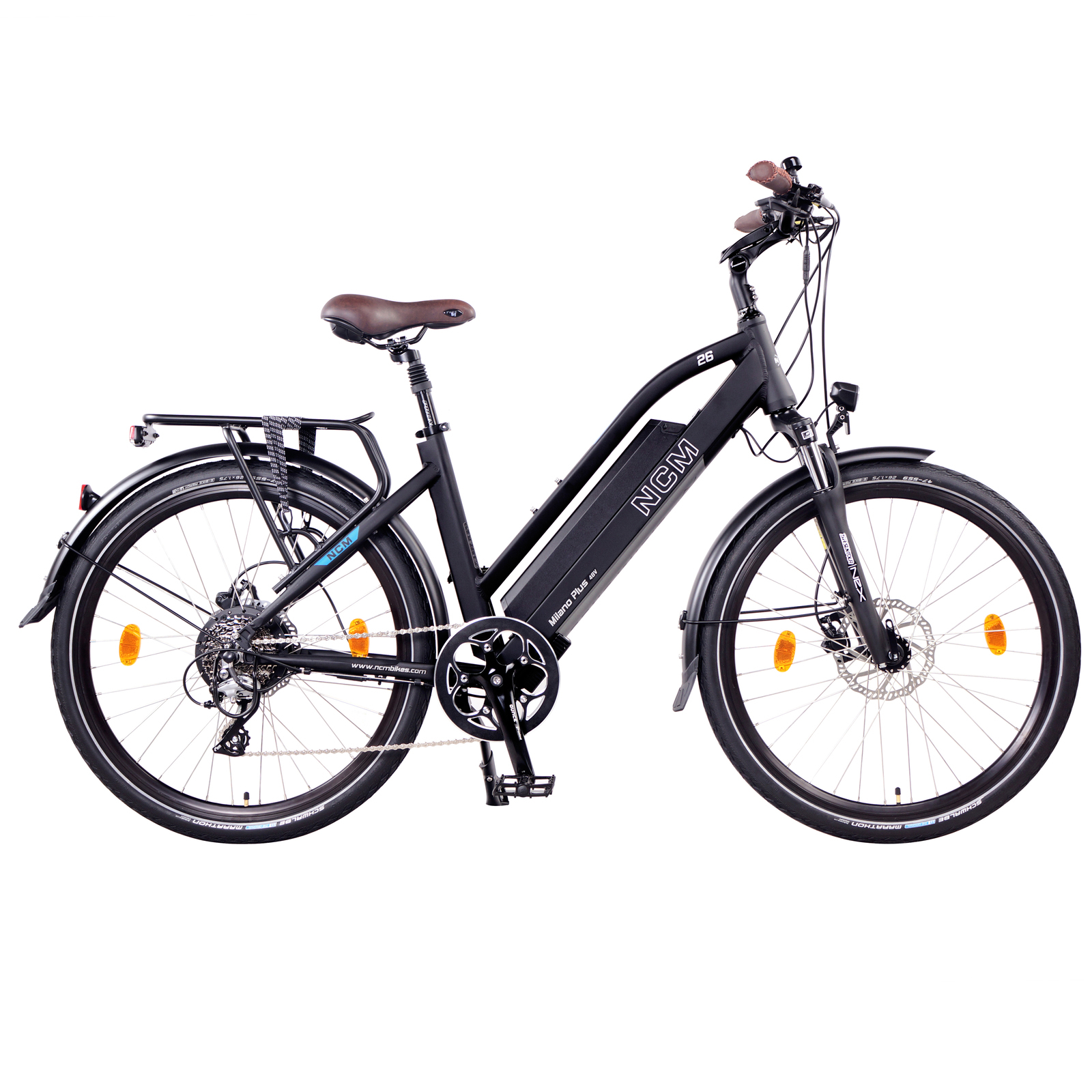
NCM
Milano Plus
Longer daily commutes on a step-through frame
- Price
- $2,199–$2,399as listed at Leon Cycle, 2026-08-15
- Battery
- 768 Wh
- Range
- Up to 150 km manufacturer claim
Road legal Ships in the 250W / 25 km/h configuration Australian law requires. What the rules say
Why it's here
The most commuter-shaped bike we have verified: a step-through trekking frame with a 768 Wh battery, which is enough capacity to ride a week of ordinary commutes between charges rather than plugging in every night.
What it isn't
At $2,199–$2,399 it is the most expensive bike in this shortlist, and the 150 km range headline is a manufacturer figure measured in ideal conditions — not what you will see into a headwind on assist level three.
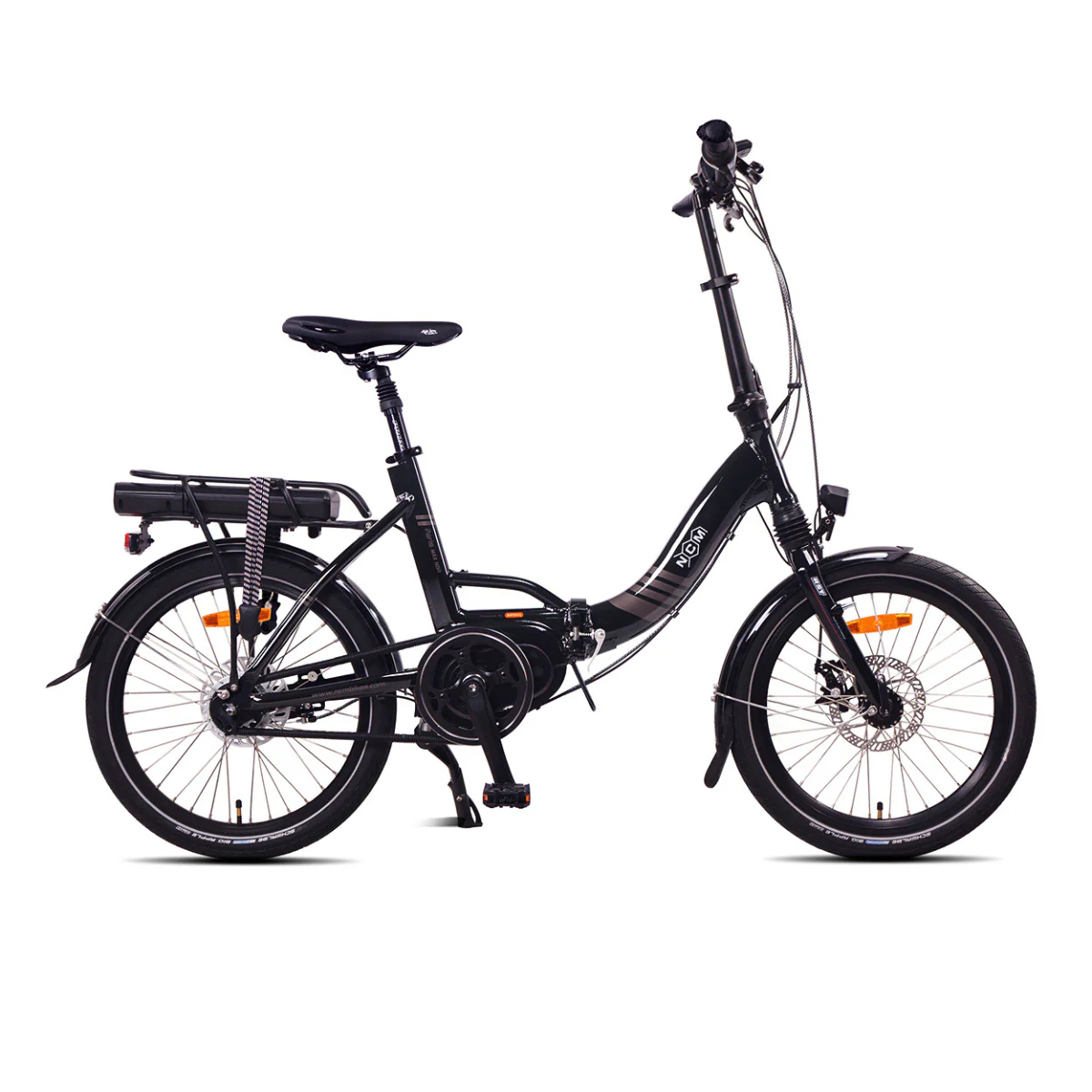
NCM
Paris
Folding into a car boot, caravan or train carriage
- Price
- From $1,599as listed at Leon Cycle, 2026-08-15
- Battery
- 540 Wh
- Range
- Up to 110 km manufacturer claim
- Weight
- ~22 kg
Road legal Ships in the 250W / 25 km/h configuration Australian law requires. What the rules say
Why it's here
A step-through frame that also folds, which solves the two problems that stop people commuting by e-bike: mounting the bike in work clothes, and having nowhere secure to leave it at the other end.
What it isn't
20-inch wheels feel less settled than a full-size commuter at speed, and at around 22 kg it folds more easily than it carries.
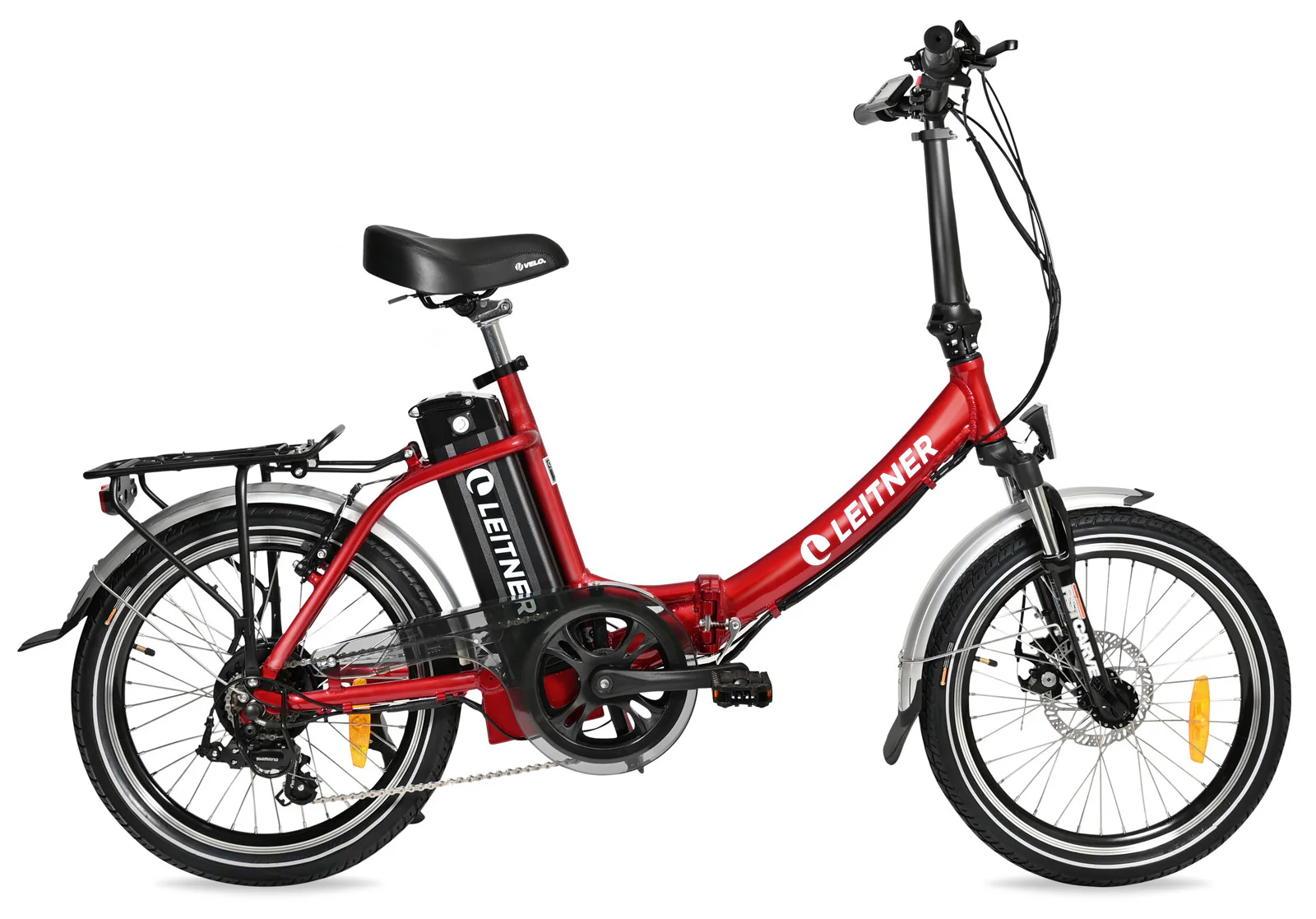
Leitner
Libelle
The lowest entry price with Australian support
- Price
- From ~$1,375as listed at Leitner, 2026-08-15
- Battery
- Samsung lithium pack
- Range
- ~50 km manufacturer claim
Road legal EPAC-certified at 250W with a 25 km/h assist cut-out. What the rules say
Why it's here
The cheapest way into a step-through e-bike with an Australian entity behind the warranty, at around $1,375. For a short, flat commute it is enough bike.
What it isn't
Around 50 km of claimed range and a basic specification with no suspension. If your commute is long or hilly, the Milano Plus is the better buy despite the price gap.
What this guide doesn't cover yet
The legal part
Frequently asked questions
What is a step-through electric bike?
One with a low or absent top tube, so you step through the frame rather than swinging a leg over the saddle. It makes mounting and dismounting easier in everyday clothes and for anyone with limited hip or knee mobility.
Are step-through e-bikes less sturdy than a diamond frame?
A step-through frame has to be reinforced to compensate for the missing top tube, which is why they usually weigh slightly more. On the bikes here that reinforcement is part of the design rather than an afterthought, and frame flex is not something ordinary commuting will find.
How much range do I need for commuting?
Work out your return trip, double it, and look for a bike whose claimed range comfortably exceeds that — manufacturer figures are best-case. A 540 Wh to 768 Wh battery, which is what these bikes carry, covers most Australian commutes with margin.
Do I need a licence or registration to commute on an e-bike in Australia?
No, provided the bike stays within the 250W continuous and 25 km/h assist limits. Above those figures it is no longer legally a bicycle, and it cannot be registered as a motorcycle either — which is why powerful imports end up restricted to private property.