Electric mountain bikes in Australia
Electric mountain bikes are the category where the gap between what a bike costs and what it can do is widest, and where one technical decision — hub motor or mid-drive — matters more than every other line on the spec sheet.
We have verified two relevant bikes so far, and both are hub-drive. Rather than dress that up as a top ten, this guide explains what decides the choice, then shows you exactly what we have checked and what we have not.
How we make money: we link to retailers so you can check current prices. We have no confirmed affiliate or commission relationship with any retailer yet, so nothing on this page is a paid placement. Read the full disclosure.
What decides this choice
Hub motor or mid-drive decides everything
A mid-drive turns the cranks and uses the bike's gears, so it multiplies torque on steep climbs. A hub motor pushes the wheel at a fixed ratio and bogs down exactly where you need it most. Every bike we have verified in this category is hub-drive, and that is the single biggest limitation of the shortlist below.
The 250W limit bites hardest here
Trail riding is the use case that most wants more power and is least likely to happen on a public road. If you ride on private land, the 500W and 750W bikes become an option. On public trails and fire roads, 250W continuous and 25 km/h is the law regardless of what the trail looks like.
Suspension travel is not the headline number
A 100 mm fork with a working lockout and proper damping beats a longer-travel fork with neither. On e-MTBs at this price the fork is usually the first component riders replace, so budget for it rather than paying for travel you cannot control.
Weight changes how a trail bike behaves
These bikes are 35–38 kg. That is fine when the motor is running and a serious problem when the battery is flat, the trail turns upward, or you have to lift the bike over an obstacle. Plan routes around the battery, not around your legs.
What we've verified so far
These are the bikes relevant to this category whose specifications, price and Australian availability we have checked ourselves. It is a shortlist, not a ranking of the whole market.
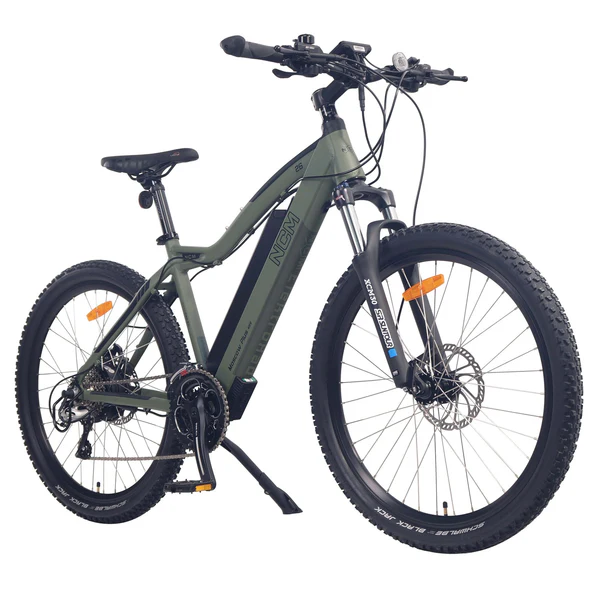
NCM
Moscow Plus
Mixed road and light-trail riding with a big battery
- Price
- From $2,199as listed at Leon Cycle, 2026-08-15
- Battery
- 768 Wh
- Range
- 50–110 km manufacturer claim
- Weight
- 27 kg
Road legal Ships in the 250W / 25 km/h configuration Australian law requires. What the rules say
Verified on Leon Cycle Australia on 15 August 2026.
Why it's here
The most trail-capable bike we have verified at this price: a 100 mm Suntour fork with lockout, 8-speed gearing, hydraulic discs, a 768 Wh battery and a choice of 27.5-inch or 29-inch wheels.
What it isn't
It is a hub-drive bike, which is the central compromise of this category at this price. A hub motor cannot use the bike's gears, so on a steep technical climb it works against you exactly where a mid-drive would help. Leon Cycle listed it from $2,199 when checked on 15 August 2026.
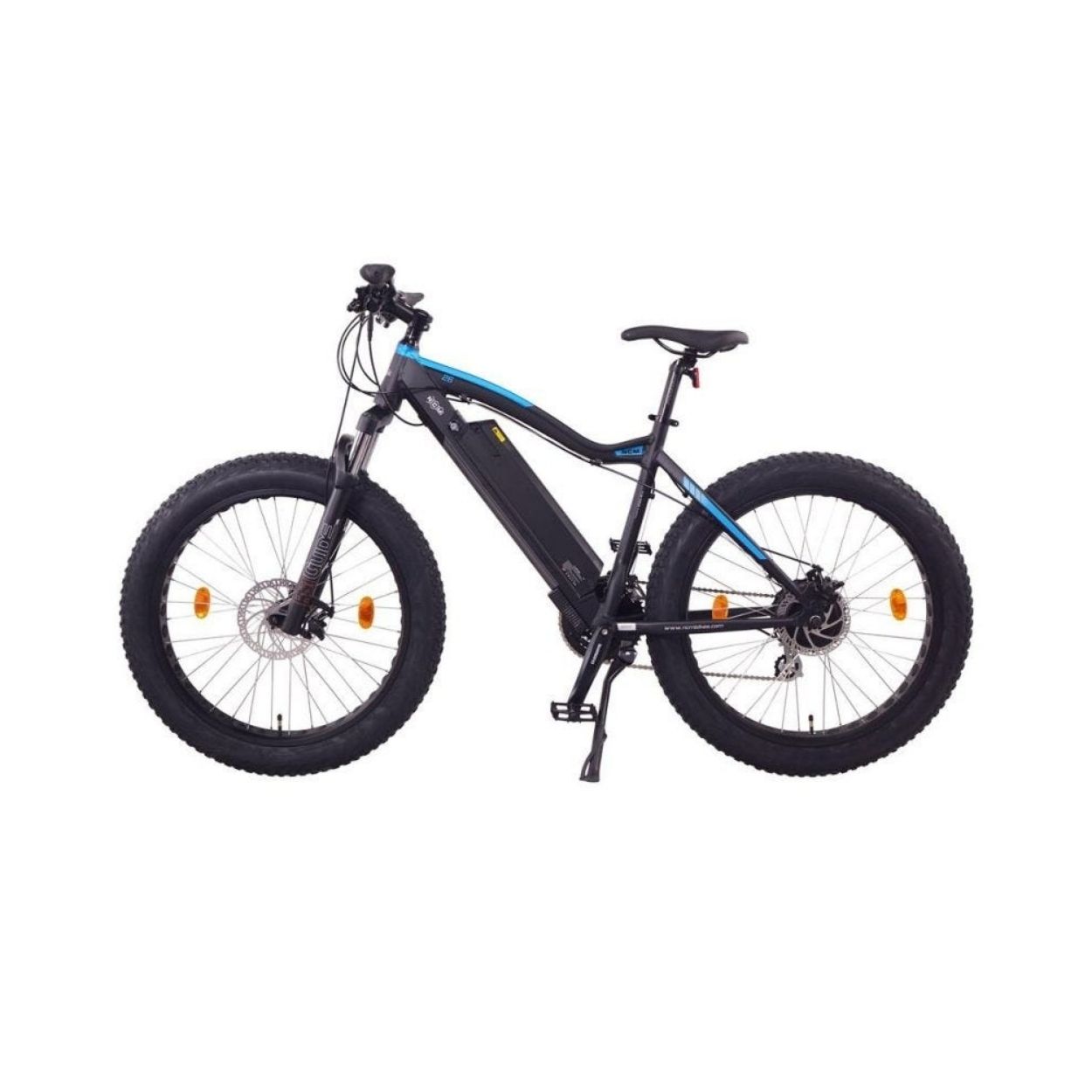
NCM
Aspen Fat
Sand, gravel and fire trails on a budget
- Price
- $1,799as listed at Leon Cycle, 2026-08-15
- Battery
- 624 Wh
- Range
- Up to 120 km manufacturer claim
- Weight
- 38 kg
Road legal EN15194 certified at 250W with assist cutting out at 25 km/h. What the rules say
Why it's here
A fat tyre e-MTB that is genuinely road legal at 250W, with 624 Wh and hydraulic brakes for $1,799. On sand, loose gravel and fire trails the tyre width does more for traction than any amount of suspension travel.
What it isn't
At 38 kg with a 120 kg maximum load it is a heavy, low-capacity bike, and fat tyres are the wrong tool for fast, hard-packed singletrack.
What this guide doesn't cover yet
The legal part
Frequently asked questions
Can I ride an electric mountain bike on trails in Australia?
On public trails you need a bike within the 250W and 25 km/h limits, and you also need to check the individual land manager's rules — some national parks and reserves restrict or ban e-bikes on singletrack regardless of the bike's legal classification.
Is a hub motor good enough for mountain biking?
For fire roads, gravel and rolling terrain, yes. For steep, technical, low-speed climbing, a hub motor is a real compromise, because it cannot use the bike's gearing to multiply torque the way a mid-drive can. Both bikes in this shortlist are hub-drive.
How much does a decent electric mountain bike cost in Australia?
The verified bikes here start at $1,799. Full-suspension mid-drive e-MTBs from the established mountain bike brands start several thousand dollars above that, and we have not yet verified Australian pricing for those models.
Are fat tyres better than a suspension fork off-road?
They solve different problems. Fat tyres float over soft, loose surfaces like sand and deep gravel; suspension controls impacts on hard, rough surfaces like rocky singletrack. On typical Australian coastal and fire-trail riding, tyre width is often the more useful of the two.